Saturday, September 16, 2006
Word of the Day, Saturday: Pubmed
Pubmed is a scientific literature search engine. You can search for particular disease, authors and key words. It's an invaluable tool for reviewing the literature. I always have a window open with pubmed running. So next time you need a publication, check it out.

Common Sense: Most Money Is Made By Waiting, Not Trading
Most Money Is Made By Waiting, Not Trading
A common mistake for stock market investors is overtrading. Learning to sit and wait is one of the biggest challenges for many.
Jesse Livermore, one of the world's greatest investors, said: "It is never your thinking that makes big money. It's the sitting."
Stocks stair-step their way higher by breaking out of basing patterns, running up and then forming new bases from which they break out. Savvy investors learn how to hang on to leading stocks that go through normal pullbacks rather than sell them.
Beginning investors are often shaken out of winning stocks because they buy incorrectly. You can avoid that by buying a stock within 5% of its buy point in a sound base. Studies of past winners show that stocks breaking out of sound bases on heavy volume rarely retreat more than 8% from the proper buy point.
So buying right will let you sit longer with winners.
They don't all work, of course. So you should always sell if a stock falls 8% below your buy point. That saves your capital for stocks that do work.
After a substantial run-up, a correction of 8% to 12% from a peak is considered normal. If you buy a stock on a breakout and it goes up 20%, don't sell just because it pulls back from its high. Watch to see if it can resume its run or carve out a new base.
Just be careful not to let such gains turn into losses by holding on as a stock falls back below the original buy point.
And keep an eye out for stocks with extra oomph. One that shoots up 20% or more in only one to four weeks should be held for at least eight weeks unless it falls all the way back near your buy point.
Stocks that show this kind of strength often double or triple in short order. But they often correct sharply, shaking out those who don't follow the eight-week rule.
A common mistake for stock market investors is overtrading. Learning to sit and wait is one of the biggest challenges for many.
Jesse Livermore, one of the world's greatest investors, said: "It is never your thinking that makes big money. It's the sitting."
Stocks stair-step their way higher by breaking out of basing patterns, running up and then forming new bases from which they break out. Savvy investors learn how to hang on to leading stocks that go through normal pullbacks rather than sell them.
Beginning investors are often shaken out of winning stocks because they buy incorrectly. You can avoid that by buying a stock within 5% of its buy point in a sound base. Studies of past winners show that stocks breaking out of sound bases on heavy volume rarely retreat more than 8% from the proper buy point.
So buying right will let you sit longer with winners.
They don't all work, of course. So you should always sell if a stock falls 8% below your buy point. That saves your capital for stocks that do work.
After a substantial run-up, a correction of 8% to 12% from a peak is considered normal. If you buy a stock on a breakout and it goes up 20%, don't sell just because it pulls back from its high. Watch to see if it can resume its run or carve out a new base.
Just be careful not to let such gains turn into losses by holding on as a stock falls back below the original buy point.
And keep an eye out for stocks with extra oomph. One that shoots up 20% or more in only one to four weeks should be held for at least eight weeks unless it falls all the way back near your buy point.
Stocks that show this kind of strength often double or triple in short order. But they often correct sharply, shaking out those who don't follow the eight-week rule.
Friday, September 15, 2006
Lesson of the day: Friday
Don't let the market hold your money over the weekend. I got burned........
Critical Therapeutics Drug Data Weak: Read here to find out why
Shares of biotech drugmaker Critical Therapeutics Inc. set a fresh 52-week low Friday after the company said a mid-stage clinical trial for an anti-inflammatory compound that was stopped early showed no trends that the drug was effective.
The company said the Phase II trial looked to see if the compound CTI-01 was effective in reducing complications 14 to 28 days after heart surgery. However, the study was halted in March after a manufacturing issue arose surrounding the drug's container closure.
Only 102 patients had been enrolled, not enough to show statistical significance for efficacy. But even data from these patients did not show a trend toward effectiveness, the company said.
Critical Therapeutics plans to assess if there is an opportunity to continue development of CTI-01 with a collaborative partner, or to out-license it.
Shares of Critical Therapeutics fell 12 cents, or 4.3 percent, to $2.70 in morning trading on the Nasdaq. Earlier in the session, the stock set a new 52-week low of $2.56. The previous low of $2.73 was set Thursday.
CTI-01 is Ethyl pyruvate. Pyruvate plays a role in metabolism as a free radical scavenger. However, it cannot be useful in the cell alone because it is not stable. Therefore the company has modified it chemically for stability. it is a strong antiinflammatory agent being used in numerous treatments such as ischemic heart disease (heart attack in the ER, stroke and diabetes. There was no difference in CTI-01 from placebo. More than likely it's a stability problem or dosing issue.
Questions? Feel free to ask and I'll answer them the best I can.
The company said the Phase II trial looked to see if the compound CTI-01 was effective in reducing complications 14 to 28 days after heart surgery. However, the study was halted in March after a manufacturing issue arose surrounding the drug's container closure.
Only 102 patients had been enrolled, not enough to show statistical significance for efficacy. But even data from these patients did not show a trend toward effectiveness, the company said.
Critical Therapeutics plans to assess if there is an opportunity to continue development of CTI-01 with a collaborative partner, or to out-license it.
Shares of Critical Therapeutics fell 12 cents, or 4.3 percent, to $2.70 in morning trading on the Nasdaq. Earlier in the session, the stock set a new 52-week low of $2.56. The previous low of $2.73 was set Thursday.
CTI-01 is Ethyl pyruvate. Pyruvate plays a role in metabolism as a free radical scavenger. However, it cannot be useful in the cell alone because it is not stable. Therefore the company has modified it chemically for stability. it is a strong antiinflammatory agent being used in numerous treatments such as ischemic heart disease (heart attack in the ER, stroke and diabetes. There was no difference in CTI-01 from placebo. More than likely it's a stability problem or dosing issue.
Questions? Feel free to ask and I'll answer them the best I can.
Thursday, September 14, 2006
BioTech vs. Academia: Why can't we get along?
I have worked in both biotech and academia and heard this argument for years. There is a clear jealous element there from academia (that's the least offensive word I could come up with) on the money that industrial scientists earn. Whilst those in academia say that industrial science get too focused on one thing and "not the big picture". The argument continues in that for all your successful work in academic science, you have to beg for money every four years [depending on the mood of the NIH], and IF your fruits payoff, your reward is just a published paper. On the other hand, if you have an active role in biotech research, you may have contributed to a life saving drug. To me, that beats a paper in some political biased journal---[remember it's not what you know but who.] I think that the bias against Biotech is that academia is pretty much set in their position--you do a postdoc, get your own lab, and publish or perish. If successful, then you get tenure and continue your basic research on flies/yeast/slime mold. What is the HUMAN PHYSIOLOGICAL SIGNIFICANCE OF YOUR RESEARCH is what you have to ask yourself.
Industry relies on your basic research for initial development/background analysis of future IND development. The scrutiny that Biotech science goes through would clearly not function in the University setting.
In the end, it's not practical to argue; it's apples and oranges when you consider both sides.
I'd like to read your opinions.
Industry relies on your basic research for initial development/background analysis of future IND development. The scrutiny that Biotech science goes through would clearly not function in the University setting.
In the end, it's not practical to argue; it's apples and oranges when you consider both sides.
I'd like to read your opinions.
Apotex deal shows impact of generics on Pharma
Bristol-Myers Squibb and Sanofi-Aventis troubled deal with Apotex highlights the tactics that traditional large pharmaceutical companies are being forced to adopt as they struggle to adjust to intensifying international competition from generic medicines.
From friendly deals with, or even takeovers of, their generic rivals, through to bitter litigation or price cutting to fight against them, they are under heavy pressure to adapt to a more hostile commercial environment. While pharmaceuticals remain highly profitable, the escalating value of drug sales – more than $600bn globally last year – is creating an ever heavier burden on health systems.
Although drugs represent a small proportion of total health expenditures, they are an easier target than many others – such as doctors' salaries, hospital overheads and older more expensive forms of care.
n the period 2005-2010, Datamonitor, the market research company, estimates that the pharmaceutical industry is threatened by the loss of $105bn in revenues from medicines that are coming off patent.
However, the pace of scientific research and drug development is failing to keep pace, with the number of new patented medicines well below past levels.
Companies are experimenting with new management techniques to boost efficiency in innovation as they seek to generate the next generation of drugs.
In the US, legislation encourages generic companies to challenge drug company patents, with the incentive of exclusivity for the first six months after launch. Health reforms introduced last year that indirectly make the federal government the purchaser of the majority of drugs are bringing fresh pressures for efficiency.
In Europe, no such rules exist, but some countries such as Germany strongly favour the generic industry, and all of the state-funded health systems are seeking ways to cut their drug bills.
Novartis, the research-based Swiss-based group, went as far as to buy the German business Hexal last year, becoming one of the world's largest generic companies as a result.
But competition is not limited to the patented drug companies. "The volume of our business is increasing, but the pricing is not," says Greg Perry, head of the European Generics Association, a trade body.
With low-cost generic companies in the developing world – such as Ranbaxy in India – expanding into Europe and the US, there is a wave of consolidation within the generic industry too.
This is why drug companies need revenue to discover and market next generation medicines.
Bristol-Myers Squibb trades on the New York Stock Exchange under the symbol BMY and was down 0.13 cents/share. Aventis-Sanofi trades on the NYSE under SNY and lost 0.47 cents to 43.38.
From friendly deals with, or even takeovers of, their generic rivals, through to bitter litigation or price cutting to fight against them, they are under heavy pressure to adapt to a more hostile commercial environment. While pharmaceuticals remain highly profitable, the escalating value of drug sales – more than $600bn globally last year – is creating an ever heavier burden on health systems.
Although drugs represent a small proportion of total health expenditures, they are an easier target than many others – such as doctors' salaries, hospital overheads and older more expensive forms of care.
n the period 2005-2010, Datamonitor, the market research company, estimates that the pharmaceutical industry is threatened by the loss of $105bn in revenues from medicines that are coming off patent.
However, the pace of scientific research and drug development is failing to keep pace, with the number of new patented medicines well below past levels.
Companies are experimenting with new management techniques to boost efficiency in innovation as they seek to generate the next generation of drugs.
In the US, legislation encourages generic companies to challenge drug company patents, with the incentive of exclusivity for the first six months after launch. Health reforms introduced last year that indirectly make the federal government the purchaser of the majority of drugs are bringing fresh pressures for efficiency.
In Europe, no such rules exist, but some countries such as Germany strongly favour the generic industry, and all of the state-funded health systems are seeking ways to cut their drug bills.
Novartis, the research-based Swiss-based group, went as far as to buy the German business Hexal last year, becoming one of the world's largest generic companies as a result.
But competition is not limited to the patented drug companies. "The volume of our business is increasing, but the pricing is not," says Greg Perry, head of the European Generics Association, a trade body.
With low-cost generic companies in the developing world – such as Ranbaxy in India – expanding into Europe and the US, there is a wave of consolidation within the generic industry too.
This is why drug companies need revenue to discover and market next generation medicines.
Bristol-Myers Squibb trades on the New York Stock Exchange under the symbol BMY and was down 0.13 cents/share. Aventis-Sanofi trades on the NYSE under SNY and lost 0.47 cents to 43.38.
Thursday word of the day: Efficacy
I see this word thrown around a lot in biotech company press releases, usually incorrectly. Usually it gets mixed up with synergistic. So let's settle it.
EFFICACY: (Of a drug or treatment). The maximum ability of a drug or treatment to produce a result regardless of dosage. A drug passes efficacy trials if it is effective at the dose tested and against the illness for which it is prescribed. In the procedure mandated by the FDA, Phase II clinical trials gauge efficacy, and Phase III trials confirm it
EFFICACY: (Of a drug or treatment). The maximum ability of a drug or treatment to produce a result regardless of dosage. A drug passes efficacy trials if it is effective at the dose tested and against the illness for which it is prescribed. In the procedure mandated by the FDA, Phase II clinical trials gauge efficacy, and Phase III trials confirm it
An explanation of Campath from Genzyme
Genzyme today announced a two-year interim results from a Phase 2 trial comparing Campath® (alemtuzumab) with Rebif® (interferon beta-1a) for the treatment of multiple sclerosis. The results derive from a pre-specified analysis conducted after two years of treatment for 334 patients in the planned three-year trial. This review was conducted in conjunction with an independent data and safety monitoring board.
As previously announced, dosing of alemtuzumab in this study was suspended in September 2005 after three patients developed immune thrombocytopenic purpura (ITP), a treatable condition in which patients experience a low platelet count as a result of an immune response directed against the platelets. At that time, most patients had received two cycles of therapy with alemtuzumab. Treatment with Rebif in the control arm has continued without interruption. The trial remains on clinical hold in the United States, and Genzyme is working closely with clinical investigators and regulatory agencies to complete the study and ensure that the risk of ITP is well understood and managed. The company discourages physicians and patients from using alemtuzumab for MS outside of a clinical trial setting in which procedures are in place for managing ITP risk.
The rest of the story is here: http://biz.yahoo.com/prnews/060914/neth013.html?.v=71
What happenend from the scientific point of view? What is interferon beta1? What is Campath? What are platelets? Time to find out!
First of all Campath is used in the treatment of multiple sclerosis. It is a monoclonal humanized antibody (it's name is alemtuzumab---you can always quickly what drugs are antibodies quick; the mab at the end of the word means "monoclonal antibody")that recognizes CD52 on immune system tumor cells. OK, what is CD52? CD52 is a tumor antigen. When Campath binds to CD52, the body recognizes it as disease and proceeds to kill cells with Campath bound. It does this by antibody dependent cytotoxicity and complement.
Interferon is a proinflammaotry cytokine released by cells to trigger the immune response. This helps the body determine which cells to kill that are diseased. It is a strong immuno-therepy drug used for many diseases including viral infections.
If you have any more specific questions I didn't get into here, leave me a comment and i'll try to explain it in another post.
Genzyme GeNZ closed NASDAQ trading today up 2.7% at 68.35
As previously announced, dosing of alemtuzumab in this study was suspended in September 2005 after three patients developed immune thrombocytopenic purpura (ITP), a treatable condition in which patients experience a low platelet count as a result of an immune response directed against the platelets. At that time, most patients had received two cycles of therapy with alemtuzumab. Treatment with Rebif in the control arm has continued without interruption. The trial remains on clinical hold in the United States, and Genzyme is working closely with clinical investigators and regulatory agencies to complete the study and ensure that the risk of ITP is well understood and managed. The company discourages physicians and patients from using alemtuzumab for MS outside of a clinical trial setting in which procedures are in place for managing ITP risk.
The rest of the story is here: http://biz.yahoo.com/prnews/060914/neth013.html?.v=71
What happenend from the scientific point of view? What is interferon beta1? What is Campath? What are platelets? Time to find out!
First of all Campath is used in the treatment of multiple sclerosis. It is a monoclonal humanized antibody (it's name is alemtuzumab---you can always quickly what drugs are antibodies quick; the mab at the end of the word means "monoclonal antibody")that recognizes CD52 on immune system tumor cells. OK, what is CD52? CD52 is a tumor antigen. When Campath binds to CD52, the body recognizes it as disease and proceeds to kill cells with Campath bound. It does this by antibody dependent cytotoxicity and complement.
Interferon is a proinflammaotry cytokine released by cells to trigger the immune response. This helps the body determine which cells to kill that are diseased. It is a strong immuno-therepy drug used for many diseases including viral infections.
If you have any more specific questions I didn't get into here, leave me a comment and i'll try to explain it in another post.
Genzyme GeNZ closed NASDAQ trading today up 2.7% at 68.35
Wednesday, September 13, 2006
Merck Challenged about validity of Vioxx Clinical Trials
Two studies offer more evidence about the dangers of some painkillers, adding kidney problems to heart concerns already raised with the drug once sold as Vioxx, researchers said.
One report from Boston's Brigham and Women's Hospital and Harvard Medical School said an analysis of 114 studies involving more than 116,000 people showed that rofecoxib (the chemical name for Vioxx) "was associated with increased renal and (heart) arrhythmia risks."
Why the drug would cause kidney damage is unclear, it added.
Merck & Co Inc. withdrew Vioxx from the market in September 2004 after a three-year study showed it doubled the risk of heart attack and strokes in patients taking it for at least 18 months.
A second report from the University of Newcastle, New South Wales, Australia, said a look at 23 studies confirms findings of an increased risk of heart problems with Vioxx that could be found "during the first 30 days of treatment. This conclusion is consistent with a recent reanalysis ... which contradicts the original suggestion that the vascular risk was only seen after 18 months."
Merck is facing more than 11,500 product liability lawsuits from people claiming to have been harmed by Vioxx.
"Those studies will also be used to cross-examine and impeach Merck's experts who testify that there is no link between the drug and the injuries," McClellan said. "The impact could be profound in the outcomes of the trials."
Merck said it still believes the data confirm the increased heart risk begins only after the medicine had been taken for 18 months.
The Australian analysis also found that celecoxib -- sold as Celebrex by Pfizer Inc. -- was not associated with heart problems at a dose no greater than 200 milligrams a day.
In his editorial, Graham said the studies demonstrate that Vioxx "increases the risk of acute myocardial infarction at low and high doses" and that "there is no initial 18-month period of immunity from risk."
He said Celebrex increases heart risk at doses higher than 200 milligrams per day and several other non-steroidal anti-inflammatory drugs (NSAIDs) increase risk, including diclofenac, meloxicam, indomethacin and "probably" ibuprofen, while studies agree naproxen is "neutral" for heart attack risk.
Graham added that for most patients with arthritis or other conditions requiring chronic pain relief "naproxen appears to be the safest NSAID choice from a cardiovascular perspective." Naproxen is commonly sold as Aleve by Bayer Corp..
I read the JAMA science article, the data is quite clear to me.
Merck closed today at $41.09, down 2.5% on NYSE trading.
One report from Boston's Brigham and Women's Hospital and Harvard Medical School said an analysis of 114 studies involving more than 116,000 people showed that rofecoxib (the chemical name for Vioxx) "was associated with increased renal and (heart) arrhythmia risks."
Why the drug would cause kidney damage is unclear, it added.
Merck & Co Inc. withdrew Vioxx from the market in September 2004 after a three-year study showed it doubled the risk of heart attack and strokes in patients taking it for at least 18 months.
A second report from the University of Newcastle, New South Wales, Australia, said a look at 23 studies confirms findings of an increased risk of heart problems with Vioxx that could be found "during the first 30 days of treatment. This conclusion is consistent with a recent reanalysis ... which contradicts the original suggestion that the vascular risk was only seen after 18 months."
Merck is facing more than 11,500 product liability lawsuits from people claiming to have been harmed by Vioxx.
"Those studies will also be used to cross-examine and impeach Merck's experts who testify that there is no link between the drug and the injuries," McClellan said. "The impact could be profound in the outcomes of the trials."
Merck said it still believes the data confirm the increased heart risk begins only after the medicine had been taken for 18 months.
The Australian analysis also found that celecoxib -- sold as Celebrex by Pfizer Inc. -- was not associated with heart problems at a dose no greater than 200 milligrams a day.
In his editorial, Graham said the studies demonstrate that Vioxx "increases the risk of acute myocardial infarction at low and high doses" and that "there is no initial 18-month period of immunity from risk."
He said Celebrex increases heart risk at doses higher than 200 milligrams per day and several other non-steroidal anti-inflammatory drugs (NSAIDs) increase risk, including diclofenac, meloxicam, indomethacin and "probably" ibuprofen, while studies agree naproxen is "neutral" for heart attack risk.
Graham added that for most patients with arthritis or other conditions requiring chronic pain relief "naproxen appears to be the safest NSAID choice from a cardiovascular perspective." Naproxen is commonly sold as Aleve by Bayer Corp..
I read the JAMA science article, the data is quite clear to me.
Merck closed today at $41.09, down 2.5% on NYSE trading.
Wednesday Word of the day: Pharmacokinetics
PHARMACOKINETICS: The processes (in a living organism) of absorption, distribution, metabolism, and excretion of a drug or vaccine.
This is one of the first things done in a drug investigation. It goes hand in hand with toxicity. Companies pay A LOT of money to do these studies, so they better be right when the drug hits the clinic.
This is one of the first things done in a drug investigation. It goes hand in hand with toxicity. Companies pay A LOT of money to do these studies, so they better be right when the drug hits the clinic.
Cardiome shares drop on heart drug test data
TORONTO--Cardiome Pharma Corp.'s shares dipped more than 10 percent on Wednesday after reporting mixed phase 2a results for a treatment for abnormal heartbeats, which fell short of investor expectations.
The study of the investigational drug RSD1235 for the conversion of atrial fibrillation showed that 61 percent of patients in the 300 mg dose completed the study with a normal heart rhythm, compared with 43 percent of all patients receiving a placebo.
Patients in the 600 mg dosing group also showed a 61 percent occurrence of normal heart rhythm compared with 43 percent of patients receiving a placebo, but fell short of expectations on a key comparison.
The data was in line with similar preliminary data Cardiome reported in late July, which sent the stock soaring almost 35 percent in one day after the numbers were released.
Cardiome shares were down C$1.67, or 11.2 percent, at C$13.27 on the Toronto Stock Exchange at midday on a volume of 429,000 shares. On Nasdaq, the shares were off $1.50, or 11.3 percent, at $11.81.
Analysts said investors were looking for improved results above the reported 61 percent in the 600 mg range, from the latest tests.
"This is a continuation of the interim results. I just think that the market got overly enthusiastic with the interim results and we were looking for something much better," said John Maletic, an analyst at Scotia Capital in Toronto.
The Vancouver, British Columbia-based company said 171 patients were successfully cardioverted after the initial three days of dosing and continued in the study, of which 159 either completed the dosing or relapsed to atrial fibrillation.
The remainder of the patients were discontinued from the study for reasons unrelated to atrial fibrillation.
The company said the safety data for both dosing groups suggests that RSD1235 appeared well-tolerated within the target population.
The company also said there were no cases of drug-related "Torsades de Pointes", a well-characterized arrhythmia which is an occasional side effect of some current anti-arrhythmic drugs.
Karl Keegan, an analyst at Canaccord Adams, said the market overreacted to the news.
So what happened? First of all, atrial fibrillation is the rapid, sometimes uncontrolled beating of the upper chambers of the heart. These rapid beats are related to electrical malfunctions in the heart. [I personally have these all the time from a related syndrome termed WPW]. Most anti-arrhythmic drugs are beta-blockers, which bind to beta adrenergic receptors in the heart and control calcium channel release. RSD1235 works in a similar way but blocks potassium channels in the upper chambers of the heart (atria).
The side effect mentioned of Torsades de Pointes is a drug side effect that affects the ventricles of the heart along with the atria, thus causing ventricular tachycardia which is not good. This tells me that RSD1235 is very specific for its target receptor.
As far as the market overreacting to the news from July trials, how often have we seen that? The drug not meeting efficacy to a significant number happens all the time and should have been factored into the stock price before this.
The study of the investigational drug RSD1235 for the conversion of atrial fibrillation showed that 61 percent of patients in the 300 mg dose completed the study with a normal heart rhythm, compared with 43 percent of all patients receiving a placebo.
Patients in the 600 mg dosing group also showed a 61 percent occurrence of normal heart rhythm compared with 43 percent of patients receiving a placebo, but fell short of expectations on a key comparison.
The data was in line with similar preliminary data Cardiome reported in late July, which sent the stock soaring almost 35 percent in one day after the numbers were released.
Cardiome shares were down C$1.67, or 11.2 percent, at C$13.27 on the Toronto Stock Exchange at midday on a volume of 429,000 shares. On Nasdaq, the shares were off $1.50, or 11.3 percent, at $11.81.
Analysts said investors were looking for improved results above the reported 61 percent in the 600 mg range, from the latest tests.
"This is a continuation of the interim results. I just think that the market got overly enthusiastic with the interim results and we were looking for something much better," said John Maletic, an analyst at Scotia Capital in Toronto.
The Vancouver, British Columbia-based company said 171 patients were successfully cardioverted after the initial three days of dosing and continued in the study, of which 159 either completed the dosing or relapsed to atrial fibrillation.
The remainder of the patients were discontinued from the study for reasons unrelated to atrial fibrillation.
The company said the safety data for both dosing groups suggests that RSD1235 appeared well-tolerated within the target population.
The company also said there were no cases of drug-related "Torsades de Pointes", a well-characterized arrhythmia which is an occasional side effect of some current anti-arrhythmic drugs.
Karl Keegan, an analyst at Canaccord Adams, said the market overreacted to the news.
So what happened? First of all, atrial fibrillation is the rapid, sometimes uncontrolled beating of the upper chambers of the heart. These rapid beats are related to electrical malfunctions in the heart. [I personally have these all the time from a related syndrome termed WPW]. Most anti-arrhythmic drugs are beta-blockers, which bind to beta adrenergic receptors in the heart and control calcium channel release. RSD1235 works in a similar way but blocks potassium channels in the upper chambers of the heart (atria).
The side effect mentioned of Torsades de Pointes is a drug side effect that affects the ventricles of the heart along with the atria, thus causing ventricular tachycardia which is not good. This tells me that RSD1235 is very specific for its target receptor.
As far as the market overreacting to the news from July trials, how often have we seen that? The drug not meeting efficacy to a significant number happens all the time and should have been factored into the stock price before this.
Tuesday, September 12, 2006
Stratagene Highlights Results of FDA's MicroArray Quality Control Project
This is exactly what I was describing in my Term of the Day from September 8th.
Stratagene's Universal Reference RNA Proves Valuable as a Reference Standard for Comparing Results From Many Microarray Platforms
LA JOLLA, Calif.--(Sept. 12, 2006--Stratagene Corporation, a developer, manufacturer and marketer of specialized life science research and diagnostic products, today highlighted the U.S. Food and Drug Administration's (FDA) publication of results from its MicroArray Quality Control (MAQC) project.
As part of the FDA's Critical Path Initiative, the MAQC project aimed to develop standards and quality measures for the microarray community, so that microarrays, as a core technology of pharmacogenomics and toxicogenomics [pharmacology/toxicology at the DNA level of protein expression], could successfully and reliably be used in clinical practice and regulatory decision-making. As a result, the MAQC project will help improve microarray technology and foster its proper applications in the discovery, development and review of FDA regulated products.
"We are proud to have been a part of this collaboration that brought together a broad range of academic, governmental, and commercial organizations, all with the future of microarray technology in mind," said Joseph A. Sorge, MD, President and CEO of Stratagene. "Stratagene's Universal Reference RNA was one of two high-quality reference standards selected as part of the MAQC project. These reference RNAs allow laboratories with many different microarray platforms to compare and share data in the global microarray community."
That is very important for both controls in actually doing the experiments (The RNA needs to be pure and clean) and it's coming from the same source so all the experiments will use the same RNA. NICE!
The project involved six FDA Centers, major providers of microarray platforms and RNA samples, the U.S Environmental Protection Agency, the National Institute of Standards and Technology, academic laboratories, and other stakeholders. By providing the public with large reference datasets along with readily accessible reference RNA samples, the MAQC project aimed to establish quality control metrics and thresholds for objectively assessing the performance achievable by various microarray platforms and evaluating the advantages and disadvantages of various data analysis methods.
For more information about Stratagene's Universal Reference RNAs, visit http://www.stratagene.com/microarrays.
Stratagene is publicly traded on the NASDAQ Index, ticker symbol:STGN
Stratagene's Universal Reference RNA Proves Valuable as a Reference Standard for Comparing Results From Many Microarray Platforms
LA JOLLA, Calif.--(Sept. 12, 2006--Stratagene Corporation, a developer, manufacturer and marketer of specialized life science research and diagnostic products, today highlighted the U.S. Food and Drug Administration's (FDA) publication of results from its MicroArray Quality Control (MAQC) project.
As part of the FDA's Critical Path Initiative, the MAQC project aimed to develop standards and quality measures for the microarray community, so that microarrays, as a core technology of pharmacogenomics and toxicogenomics [pharmacology/toxicology at the DNA level of protein expression], could successfully and reliably be used in clinical practice and regulatory decision-making. As a result, the MAQC project will help improve microarray technology and foster its proper applications in the discovery, development and review of FDA regulated products.
"We are proud to have been a part of this collaboration that brought together a broad range of academic, governmental, and commercial organizations, all with the future of microarray technology in mind," said Joseph A. Sorge, MD, President and CEO of Stratagene. "Stratagene's Universal Reference RNA was one of two high-quality reference standards selected as part of the MAQC project. These reference RNAs allow laboratories with many different microarray platforms to compare and share data in the global microarray community."
That is very important for both controls in actually doing the experiments (The RNA needs to be pure and clean) and it's coming from the same source so all the experiments will use the same RNA. NICE!
The project involved six FDA Centers, major providers of microarray platforms and RNA samples, the U.S Environmental Protection Agency, the National Institute of Standards and Technology, academic laboratories, and other stakeholders. By providing the public with large reference datasets along with readily accessible reference RNA samples, the MAQC project aimed to establish quality control metrics and thresholds for objectively assessing the performance achievable by various microarray platforms and evaluating the advantages and disadvantages of various data analysis methods.
For more information about Stratagene's Universal Reference RNAs, visit http://www.stratagene.com/microarrays.
Stratagene is publicly traded on the NASDAQ Index, ticker symbol:STGN
Labopharm announces Stage III success of Tramadol, Stock Jumps
Labopharm Inc. has announced its analgesic Tramadol, which is in late-stage trials, was found to be a safe alternative for the management of pain.
In a statement, the drugmaker said Tramadol has received regulatory approval in 22 European countries and Mexico and commercial launch of the product across Europe is underway.
For the U.S. market, Labopharm has secured a licensing and distribution agreement with Purdue Pharma.
Tramadol is classified as an mild opiate drug.
Tramadol is a racemic mixture of 2 enantiomers (mirror images of each other), each one displaying differing affinities for various receptors. Tramadol is a selective agonist of mu receptors and preferentially inhibits serotonin reuptake, whereas (-)-tramadol mainly inhibits noradrenaline reuptake. The action of these 2 enantiomers is both complementary and synergistic and results in the analgesic effect. Very interesting mechanism of action.
Labopharm is publically traded under the symbol DDS.TO on the Toronto Exchange.
In a statement, the drugmaker said Tramadol has received regulatory approval in 22 European countries and Mexico and commercial launch of the product across Europe is underway.
For the U.S. market, Labopharm has secured a licensing and distribution agreement with Purdue Pharma.
Tramadol is classified as an mild opiate drug.
Tramadol is a racemic mixture of 2 enantiomers (mirror images of each other), each one displaying differing affinities for various receptors. Tramadol is a selective agonist of mu receptors and preferentially inhibits serotonin reuptake, whereas (-)-tramadol mainly inhibits noradrenaline reuptake. The action of these 2 enantiomers is both complementary and synergistic and results in the analgesic effect. Very interesting mechanism of action.
Labopharm is publically traded under the symbol DDS.TO on the Toronto Exchange.
ALS-357 Phase I/II Initiated by Advanced Life Sciences
ALS-357
Phase I/II Initiated
Therapeutic Area Cancer
Indication Melanoma
Company Name ADVANCED LIFE SCIENCES
Web www.advancedlifesciences.com
Industry: Biotech
Advanced Life Sciences Holdings, Inc., a biopharmaceutical company engaged in the discovery, development and commercialization of novel drugs in the therapeutic areas of infection, cancer and inflammation made an oral presentation and presented a poster at the 232nd American Chemical Society National Meeting. This year's meeting is taking place in San Francisco, California, from September 10 through September 14, 2006. More than 12,500 scientists are expected to attend the Fall meeting. The Company's presentations detailed research on the chemical synthesis and apoptotic activity of caspase-activating pentacyclic triterpenoids.
The caspases belong to a family of protease enzymes that, upon activation, cleave an array of cellular proteins necessary for cell viability. This process of programmed cell death, or apoptosis, is necessary for the removal of unwanted or useless cells. The Company's lead oncology drug candidate, ALS-357, is a pentacyclic triterpenoid with an open IND to initiate Phase I/II clinical trials to treat metastatic melanoma in 2007. ALS-357 has been reported to induce apoptosis in melanoma, leukemia and difficult-to-treat neuroblastoma cell lines. It may target the mitochondria directly in these cancer cells, thus triggering activation of pro-apoptotic proteins involved in internucleosomal DNA fragmentation.
In the ongoing search for molecules effective against cancer with novel mechanisms of action, scientists at Advanced Life Sciences have embarked on the design and chemical synthesis of other novel triterpenoids. New molecules discovered through this research have emerged as potent second generation anti-cancer agents against melanoma, glioblastoma, ovarian and colon cancer cell lines. These molecules, like ALS-357, have been shown to induce apoptosis in these tumor cell lines and may represent potential new anti-cancer drug candidates.
Phase I/II Initiated
Therapeutic Area Cancer
Indication Melanoma
Company Name ADVANCED LIFE SCIENCES
Web www.advancedlifesciences.com
Industry: Biotech
Advanced Life Sciences Holdings, Inc., a biopharmaceutical company engaged in the discovery, development and commercialization of novel drugs in the therapeutic areas of infection, cancer and inflammation made an oral presentation and presented a poster at the 232nd American Chemical Society National Meeting. This year's meeting is taking place in San Francisco, California, from September 10 through September 14, 2006. More than 12,500 scientists are expected to attend the Fall meeting. The Company's presentations detailed research on the chemical synthesis and apoptotic activity of caspase-activating pentacyclic triterpenoids.
The caspases belong to a family of protease enzymes that, upon activation, cleave an array of cellular proteins necessary for cell viability. This process of programmed cell death, or apoptosis, is necessary for the removal of unwanted or useless cells. The Company's lead oncology drug candidate, ALS-357, is a pentacyclic triterpenoid with an open IND to initiate Phase I/II clinical trials to treat metastatic melanoma in 2007. ALS-357 has been reported to induce apoptosis in melanoma, leukemia and difficult-to-treat neuroblastoma cell lines. It may target the mitochondria directly in these cancer cells, thus triggering activation of pro-apoptotic proteins involved in internucleosomal DNA fragmentation.
In the ongoing search for molecules effective against cancer with novel mechanisms of action, scientists at Advanced Life Sciences have embarked on the design and chemical synthesis of other novel triterpenoids. New molecules discovered through this research have emerged as potent second generation anti-cancer agents against melanoma, glioblastoma, ovarian and colon cancer cell lines. These molecules, like ALS-357, have been shown to induce apoptosis in these tumor cell lines and may represent potential new anti-cancer drug candidates.
Term of the Day: Biacore
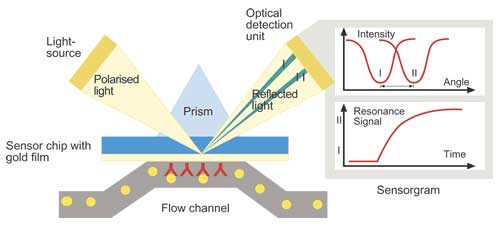
The BIACORE is an optical biosensor that uses surface plasmon resonance (SPR) for real-time monitoring of macromolecular interactions. (SPR is an light phenomenon that's used to measure changes in solution concentration of molecules). Applications include affinity measurements, binding kinetics, active concentrations, binding specificity and epitope mapping. The technology is for use in drug discovery, antibody screening, ligand fishing and therapeutics. Technical advantages include minimal sample consumption, recovery of surface bound samples for MS analysis, multi-sample analysis and measurement of weak binding events. Typically, protein or DNA is bound by one of several possible methods onto a carboxymethylated dextran-gold surface. The interacting protein of interest is injected over the surface and the kinetics of binding are measured in real time.
Monday, September 11, 2006
Term of the day: Transcription Factor

Transcription factors are proteins that bind directly to their DNA binding sequence to elicit gene expression. Such proteins need some sort activation step, such as phosphorylation/dephosphorylation. A perfect example of activation requiring steps before the protein binds to DNA is nuclear factor Kappa B (NFkB). NFkB is sequestered outside the nucleus by a inhibitor protein termed I kappa B (IkB). IkB is then phosphorylated by IkB kinase, which is then degraded. NFkB then translocates to the nucleus, binds to DNA, and turns on inflammatory genes (genes related to immune function)such as interleukins.
Oscient Shares Rise Despite Safety Issues
© 2006 The Associated Press
WASHINGTON — Shares of Oscient Pharmaceuticals Corp. gained in heavy trading Monday, possibly on speculation that the company could receive positive review for a new use of its drug Factive, despite news that the Food and Drug Administration has safety concerns about the drug.
An FDA panel of experts is scheduled to vote Tuesday on whether the drug, which is currently used to treat certain types of pneumonia and bronchitis, should be used to treat acute sinus infection. More than 30 million adults and children get sinus infections each year, according to the National Institutes of Health. There are concerns the FDA panel might decide not to recommend the sinus infection use for this drug.
According to documents released Monday by the FDA before the panel meeting, patients taking Factive were more likely to develop an allergic rash than those taking other approved products.
JMP Securities analyst Adam Cutler noted that in the briefing documents FDA staff scientists recommended against approving the drug for the new use.
"It's probably a long shot that the committee will recommend approval," Cutler said.
Shares of Waltham, Mass.-based Oscient rose 8 cents, or 7.3 percent, to $1.17 on the Nasdaq in midday trading. In the year to date, the stock has lost nearly half of its value.
Competitor Replidyne Inc. of Louisville, Colo., is also seeking to have the same use approved for its drug Faropenem. Replidyne shares lost 15 cents to $9.90 on the Nasdaq.
Merrill Lynch analyst David Munno said in a note Friday that Faropenem does not carry the same safety concerns as Oscient's drug.
According to Munno, FDA could make a decision on Replidyne's drug by Oct. 20.
Factive is a broad spectrum (different bacteria) antibiotic. It works by inhibiting proteins within the bacteria that regulate it's DNA replication (DNA gyrase and topoisomerase IV). If the bacteria can't replicate, it can't infect you enough to make you sick.
WASHINGTON — Shares of Oscient Pharmaceuticals Corp. gained in heavy trading Monday, possibly on speculation that the company could receive positive review for a new use of its drug Factive, despite news that the Food and Drug Administration has safety concerns about the drug.
An FDA panel of experts is scheduled to vote Tuesday on whether the drug, which is currently used to treat certain types of pneumonia and bronchitis, should be used to treat acute sinus infection. More than 30 million adults and children get sinus infections each year, according to the National Institutes of Health. There are concerns the FDA panel might decide not to recommend the sinus infection use for this drug.
According to documents released Monday by the FDA before the panel meeting, patients taking Factive were more likely to develop an allergic rash than those taking other approved products.
JMP Securities analyst Adam Cutler noted that in the briefing documents FDA staff scientists recommended against approving the drug for the new use.
"It's probably a long shot that the committee will recommend approval," Cutler said.
Shares of Waltham, Mass.-based Oscient rose 8 cents, or 7.3 percent, to $1.17 on the Nasdaq in midday trading. In the year to date, the stock has lost nearly half of its value.
Competitor Replidyne Inc. of Louisville, Colo., is also seeking to have the same use approved for its drug Faropenem. Replidyne shares lost 15 cents to $9.90 on the Nasdaq.
Merrill Lynch analyst David Munno said in a note Friday that Faropenem does not carry the same safety concerns as Oscient's drug.
According to Munno, FDA could make a decision on Replidyne's drug by Oct. 20.
Factive is a broad spectrum (different bacteria) antibiotic. It works by inhibiting proteins within the bacteria that regulate it's DNA replication (DNA gyrase and topoisomerase IV). If the bacteria can't replicate, it can't infect you enough to make you sick.
Cipher Pharma's Tramadol Fails Phase III, Stock down 25%
Cipher Pharmaceuticals (DND.TO) Tramadol Fails Phase 3 Trial; Stock Tumbles 25%
MISSISSAUGA, ON, Sept. 11 /CNW/ - Cipher Pharmaceuticals Inc. (TSX: DND - News) today announced preliminary results from the 02.05 Phase III study of CIP-TRAMADOL ER, an extended-release capsule formulation of the pain medication tramadol. While all three active treatment groups in the study demonstrated a reduction in pain from baseline, the 02.05 efficacy results did not achieve a statistically significant effect relative to placebo with respect to the primary endpoint. A higher than anticipated placebo effect was observed in the control arm. Cipher's New Drug Application (NDA) for CIP-TRAMADOL ER has been accepted for review by the U.S. Food and Drug Administration (FDA) as disclosed by the Company on September 5, 2006. In January 2006, Cipher announced that it had been advised by the FDA that its existing clinical data package met the requirements to file a NDA. The NDA contains data from six completed pharmacokinetic studies and five Phase III studies (three of these providing pivotal efficacy data and two providing long-term safety data). Data analysis on the 02.05 trial is continuing and Cipher will provide the final report on the 02.05 trial to the FDA once it is available.
"The clinical package we submitted to the FDA in June met the requirements for a complete NDA submission as evidenced by the fact it has now been accepted for review. We believe there is sufficient data in the package to support regulatory approval," said Larry Andrews, President and Chief Executive Officer of Cipher Pharmaceuticals. "The 02.05 trial is the latest in a series of six Phase III trials completed by Cipher for CIP-TRAMADOL ER. The high placebo effect observed is disappointing; however, this is not an uncommon occurrence in placebo controlled pain trials. We intend to complete our analysis of the 02.05 study and assess the potential contribution that the higher than anticipated placebo effect may have had on the outcome. This analysis will form part of the final report on the study".
The 02.05 study enrolled 860 patients in a double-blind randomized fixed-dose trial designed to compare efficacy and safety of CIP-TRAMADOL ER with placebo. The primary efficacy endpoint of the study was WOMAC pain intensity. The trial was conducted over a 12-week treatment period in patients with moderate to moderately severe chronic pain from osteoarthritis of the knee or hip. Patients were randomly assigned to one of four arms, a placebo arm and three active arms consisting of a 100 mg, 200 mg, or 300 mg dose of CIP-TRAMADOL ER. Patients in the 100 mg arm were on 100 mg for the entire 12-week period, while patients in the 200 mg and 300 mg arms were titrated up from 100 mg to the respective dosage.
Tramadol is a synthetic opioid that is used to treat moderate to moderately severe pain, which is commonly associated with osteoarthritis, without the severe side-effect profile of morphine and other opioids. Cipher's CIP-TRAMADOL ER capsule is a new formulation that delivers sustained-release drug delivery properties with once-daily dosing. CIP-TRAMADOL ER uses oral controlled-release bead technology developed by Cipher's technology partner, Galephar Pharmaceutical Research
The pain related placebo effect tells you how powerful the mind can be. If you think you are getting better, you will. Amazing.
MISSISSAUGA, ON, Sept. 11 /CNW/ - Cipher Pharmaceuticals Inc. (TSX: DND - News) today announced preliminary results from the 02.05 Phase III study of CIP-TRAMADOL ER, an extended-release capsule formulation of the pain medication tramadol. While all three active treatment groups in the study demonstrated a reduction in pain from baseline, the 02.05 efficacy results did not achieve a statistically significant effect relative to placebo with respect to the primary endpoint. A higher than anticipated placebo effect was observed in the control arm. Cipher's New Drug Application (NDA) for CIP-TRAMADOL ER has been accepted for review by the U.S. Food and Drug Administration (FDA) as disclosed by the Company on September 5, 2006. In January 2006, Cipher announced that it had been advised by the FDA that its existing clinical data package met the requirements to file a NDA. The NDA contains data from six completed pharmacokinetic studies and five Phase III studies (three of these providing pivotal efficacy data and two providing long-term safety data). Data analysis on the 02.05 trial is continuing and Cipher will provide the final report on the 02.05 trial to the FDA once it is available.
"The clinical package we submitted to the FDA in June met the requirements for a complete NDA submission as evidenced by the fact it has now been accepted for review. We believe there is sufficient data in the package to support regulatory approval," said Larry Andrews, President and Chief Executive Officer of Cipher Pharmaceuticals. "The 02.05 trial is the latest in a series of six Phase III trials completed by Cipher for CIP-TRAMADOL ER. The high placebo effect observed is disappointing; however, this is not an uncommon occurrence in placebo controlled pain trials. We intend to complete our analysis of the 02.05 study and assess the potential contribution that the higher than anticipated placebo effect may have had on the outcome. This analysis will form part of the final report on the study".
The 02.05 study enrolled 860 patients in a double-blind randomized fixed-dose trial designed to compare efficacy and safety of CIP-TRAMADOL ER with placebo. The primary efficacy endpoint of the study was WOMAC pain intensity. The trial was conducted over a 12-week treatment period in patients with moderate to moderately severe chronic pain from osteoarthritis of the knee or hip. Patients were randomly assigned to one of four arms, a placebo arm and three active arms consisting of a 100 mg, 200 mg, or 300 mg dose of CIP-TRAMADOL ER. Patients in the 100 mg arm were on 100 mg for the entire 12-week period, while patients in the 200 mg and 300 mg arms were titrated up from 100 mg to the respective dosage.
Tramadol is a synthetic opioid that is used to treat moderate to moderately severe pain, which is commonly associated with osteoarthritis, without the severe side-effect profile of morphine and other opioids. Cipher's CIP-TRAMADOL ER capsule is a new formulation that delivers sustained-release drug delivery properties with once-daily dosing. CIP-TRAMADOL ER uses oral controlled-release bead technology developed by Cipher's technology partner, Galephar Pharmaceutical Research
The pain related placebo effect tells you how powerful the mind can be. If you think you are getting better, you will. Amazing.
Genentech Receives FDA Letter for More Data on Proposed Expanded Use of Avastin
Genentech Receives FDA Letter for More Data on Proposed Expanded Use of Avastin SAN FRANCISCO (AP) -- Drug maker Genentech Inc. said Monday the Food and Drug Administration had sent it a complete response letter asking for more safety and efficacy information on a new application for its metastatic breast cancer treatment Avastin.
The company had asked the FDA to approve Avastin's use as a first-line therapy in conjunction with chemotherapy for metatastic breast cancer. The request means the company will have to recollect information from study sites.
The study was sponsored by the National Cancer Institute and conducted by a network of researchers led by the Eastern Cooperative Oncology Group. Genentech had submitted interim data from the trial in May.
Genentech anticipates resubmitting the data by the middle of 2007. The FDA will start a new six-month review once the data is submitted, the company said.
Avastin was approved in 2004 for the treatment of metastatic colorectal cancer. The company has been testing Avastin as a treatment for several other types of cancer. The company halted a trial testing its effectiveness on pancreatic cancer in June, after early data showed it was not significantly effective.
Shares of Genentech fell $3.16, or 3.9 percent, to $78.91 on the New York Stock Exchange in morning trading. The stock has traded between $75.58 and $100.20 over the last 52 weeks.
Metastatic breast cancer means that the cancer is relocating to other parts of the body. Usually, breast cancer cells migrate to bone and liver making it very hard to treat. Bone metastases are very nasty since radiation cannot fully penetrate bone.
Avastin is an anti-angiogenic drug that stops tumors from making their own networks of blood vessels to supply it. Avastin is a monoclonal antibody directed to bind to vascular endothelial growth factor. Basically, it binds to the signal that tells cells to make new blood vessels. Without an adequate blood supply, a tumor that wants to grow rapidly, needs a big, fresh blood supply. Without that, it shrinks and dies.
Genentech trades under the symbol DNA.
The company had asked the FDA to approve Avastin's use as a first-line therapy in conjunction with chemotherapy for metatastic breast cancer. The request means the company will have to recollect information from study sites.
The study was sponsored by the National Cancer Institute and conducted by a network of researchers led by the Eastern Cooperative Oncology Group. Genentech had submitted interim data from the trial in May.
Genentech anticipates resubmitting the data by the middle of 2007. The FDA will start a new six-month review once the data is submitted, the company said.
Avastin was approved in 2004 for the treatment of metastatic colorectal cancer. The company has been testing Avastin as a treatment for several other types of cancer. The company halted a trial testing its effectiveness on pancreatic cancer in June, after early data showed it was not significantly effective.
Shares of Genentech fell $3.16, or 3.9 percent, to $78.91 on the New York Stock Exchange in morning trading. The stock has traded between $75.58 and $100.20 over the last 52 weeks.
Metastatic breast cancer means that the cancer is relocating to other parts of the body. Usually, breast cancer cells migrate to bone and liver making it very hard to treat. Bone metastases are very nasty since radiation cannot fully penetrate bone.
Avastin is an anti-angiogenic drug that stops tumors from making their own networks of blood vessels to supply it. Avastin is a monoclonal antibody directed to bind to vascular endothelial growth factor. Basically, it binds to the signal that tells cells to make new blood vessels. Without an adequate blood supply, a tumor that wants to grow rapidly, needs a big, fresh blood supply. Without that, it shrinks and dies.
Genentech trades under the symbol DNA.
Sunday, September 10, 2006
FDA Advises Aspirin Users That Ibuprofen Can Limit Drug's Effect
WASHINGTON (AP) -- The Food and Drug Administration is advising patients who take aspirin to prevent heart attacks that taking ibuprofen for pain relief at the same time can diminish aspirin's effectiveness.
According to an advisory released Friday, ibuprofen interferes with the anti-platelet effect that helps aspirin prevent heart attacks and stroke. The agency says patients can minimize the counteraction between the drugs by limiting their use of ibuprofen.
Ibuprofen is marketed under a variety of brands, including Wyeth's Advil and Abbott Laboratories' Brufen. Aspirin is marketed in the United States by Bayer AG.
Calls placed to makers of ibuprofen were not immediately returned.
Shares of Wyeth rose 4 cents Friday to close at $48.25 on the New York Stock Exchange. Abbott's stock rose $1 to close at $48.90, while Bayer AG rose 22 cents to close at $48.37, both on the NYSE.
What does that mean?
Platelets are non-nucleated blood cells that initiate blood clotting. Aspirin has long been used as a blood thinner to treat and prevent stroke and heart related clotting problems. It's primary mechanism of action depletes platelets from the circulation and inhibiting a protein in the clotting pathway (COX, cyclooxygenase). Ibuprofen blocks the binding site to which aspirin binds to, resulting in greater than 90% inhibition of activity.
According to an advisory released Friday, ibuprofen interferes with the anti-platelet effect that helps aspirin prevent heart attacks and stroke. The agency says patients can minimize the counteraction between the drugs by limiting their use of ibuprofen.
Ibuprofen is marketed under a variety of brands, including Wyeth's Advil and Abbott Laboratories' Brufen. Aspirin is marketed in the United States by Bayer AG.
Calls placed to makers of ibuprofen were not immediately returned.
Shares of Wyeth rose 4 cents Friday to close at $48.25 on the New York Stock Exchange. Abbott's stock rose $1 to close at $48.90, while Bayer AG rose 22 cents to close at $48.37, both on the NYSE.
What does that mean?
Platelets are non-nucleated blood cells that initiate blood clotting. Aspirin has long been used as a blood thinner to treat and prevent stroke and heart related clotting problems. It's primary mechanism of action depletes platelets from the circulation and inhibiting a protein in the clotting pathway (COX, cyclooxygenase). Ibuprofen blocks the binding site to which aspirin binds to, resulting in greater than 90% inhibition of activity.
Subscribe to:
Posts (Atom)
